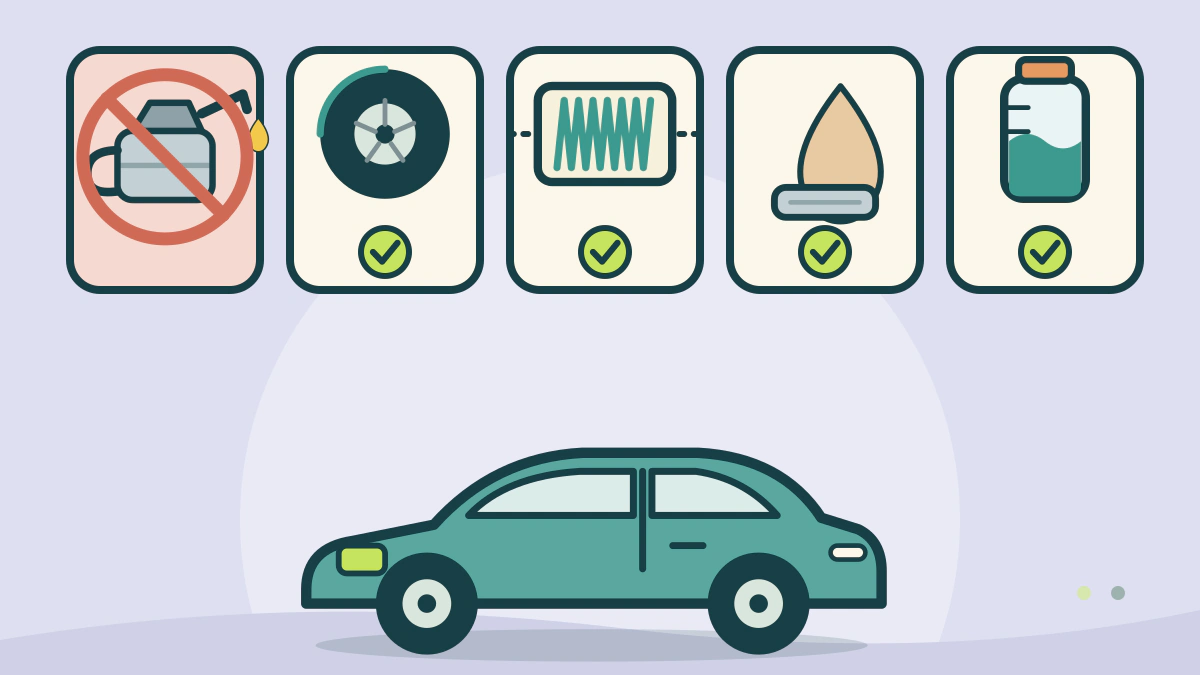
See what an all-electric car still needs: tire rotation, cabin filter, brake fluid and coolant, shown with one real 2026 owner's manual schedule.
What maintenance does an electric car need?
An all-electric car needs less routine maintenance than a gas car, but it does not need none. The Department of Energy’s Alternative Fuels Data Center says all-electric vehicles need less because they have fewer moving parts and fewer fluids to change.
It names four reasons. The battery, motor and electronics need little to no regular maintenance. There are fewer fluids, such as engine oil. Brake wear is significantly reduced. There are far fewer moving parts than in a fuel engine.
Plug-in hybrids and hybrids are different. The same page says their maintenance is similar to a conventional vehicle because they still have an engine.
A real schedule: the 2026 Kia EV9
Schedules differ by maker, model and year. One example makes the idea concrete. The 2026 Kia EV9 normal schedule lists these items.
| Item | What the 2026 EV9 manual says |
|---|---|
| Tire rotation | Every 8,000 miles or 12 months |
| Climate control air filter | Inspect at 12 months, replace at 24 months, then repeat |
| Brake fluid | Inspect every 8,000 miles or 12 months; replace every 48,000 miles or 48 months |
| Coolant | First replacement at 120,000 miles or 120 months, then every 24,000 miles or 24 months |
| Reduction gear fluid | Inspect at 48 months, then every 48 months |
The manual counts whichever comes first, miles or months. It also lists inspections of brake discs and pads, brake lines, suspension ball joints, steering parts and drive shafts at 24-month steps.
Your car may differ. Use your own manual and model year, not this table.
Tires and cabin air filter: the jobs most owners will see
Tires are the most familiar job. The same Kia manual asks owners to check tire pressure at least monthly. It also says to look for worn, unevenly worn or damaged tires and to check for loose lug nuts.
Rotation follows the schedule above. Your manual lists the correct pressures for your car.
The cabin filter is a simple, low-risk item. Kia’s severe-use table says to replace it more often after driving on rough, dusty or salt-spread roads, in heavy dust, or repeatedly on mountain roads. Our cabin air filter guide covers how it works on any car.
Brake fluid and brake parts still matter
Regenerative braking reduces friction brake wear, as the AFDC states. That does not remove brake service. The EV9 schedule still replaces brake fluid at 48 months or 48,000 miles.
The schedule sets a time limit as well as a mileage limit. Your manual sets the exact limits for your model.
The EV9 manual also repeats a federal corrosion warning. It says to wash the undercarriage often in winter and have brake lines checked. It adds that corrosion starts from the first exposure to road salt.
For how the motor slows the car, read how regenerative braking works.
Coolant is the surprise on the list
Many owners expect no coolant in an electric car. The AFDC says some battery systems use liquid coolant to keep safe temperatures. It adds that these systems may need regular checks and sends owners to the dealer or manual.
The EV9 shows how that looks in practice. The manual says to check the coolant reservoir level when you stop to charge and at least monthly. It warns that hot coolant can blow out of the opening and cause burns.
It also says coolant replacement should be done at an authorized dealer. Coolant types differ by car, so never guess which fluid to use.
Work that belongs to a professional
The wider topic lives in Electric and Hybrid Vehicles. For money, see EV vs gas car maintenance costs.
Electric cars carry high-voltage systems. The AFDC says these typically range from 400 to 1,000 volts, with battery packs in sealed shells and insulated lines.
The Kia manual says its owner instructions cover only easy items. It says several procedures can only be done by a dealer with special tools. Treat orange high-voltage cabling and the battery pack as off limits unless a service manual says otherwise.
Flooding changes the picture. The EV9 manual says to change the reduction gear fluid if the car has been submerged. See maintenance after driving through floodwater.
Frequently asked questions
Does an electric car need oil changes?
No. A fully electric car has no fuel engine, so there is no engine oil to change. The AFDC lists fewer fluids such as engine oil as one reason all-electric vehicles need less maintenance.
Do electric car brakes last longer?
Often they wear less, because regenerative braking does part of the slowing. The AFDC says brake wear is significantly reduced. The brake fluid, lines and calipers still follow the schedule in your manual.
Does the battery need regular maintenance?
The AFDC says the battery, motor and electronics need little to no regular maintenance. Some battery systems use liquid coolant that may need checks. Batteries also have a limited number of charging cycles, so ask your dealer about battery life and warranties.
Can I service an electric car myself?
Only simple items, and only as your owner’s manual allows. Tire pressure, washer fluid and visual checks are common examples. Coolant service and anything involving high-voltage parts should go to a trained technician, and your manual is the final word.