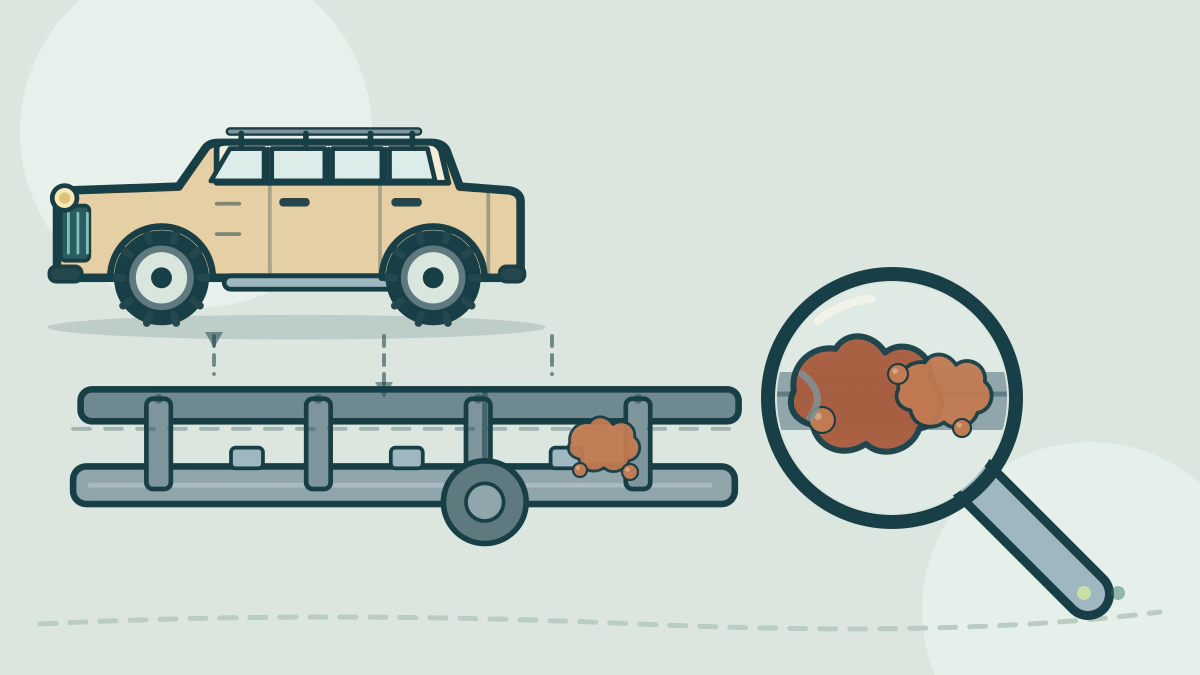
Research a classic Land Cruiser by generation, Toyota's own lineage record, import paperwork, rust, parts and your state's registration rules.
Which classic Land Cruiser is it?
Toyota’s own history calls the 40 Series the third generation, launched in August 1960 and sold for as long as 24 years, so “classic Land Cruiser” can describe very different vehicles. Start with the chassis code, body and market, not the badge.
| Toyota lineage entry | Debut | What Toyota documents | What it means for research |
|---|---|---|---|
| Land Cruiser (BJ) | August 1951 | Built for Japan’s National Police Reserve; 3.4-liter Type B six; about 3.8 meters long | The earliest cars are rarely US-market vehicles |
| Land Cruiser (20) | November 1955 | Civilian restyle; 2,285 mm and 2,430 mm wheelbases, with 2,650 mm added in 1959; exports to North America in volume | Volume exports to North America begin here in Toyota’s account |
| Land Cruiser (40) | August 1960 | Carried over the 20 Series chassis; soft-top, vans, pickup and fire engine bodies; FJ55 wagon from July 1967 | Longest run, so year-to-year parts differences matter most |
| Land Cruiser (70) | November 1984 | Successor to the 40; curved windshield, FRP top option, five wheelbases from 2,310 mm to 3,180 mm | Many wheelbase and body combinations to identify |
Toyota’s 75-year history gives each entry its own page.
What Toyota’s record leaves open
The 40 Series page is specific. Toyota says the chassis was shared with the 20 Series, with 2,285 mm, 2,430 mm and 2,650 mm wheelbases, plus a 2,950 mm chassis from 1963 for pickups and export cab-and-chassis trucks.
In July 1967 the four-door van gave way to the FJ55 wagon; diesel engines arrived in 1973 and 1974.
Not everything is spelled out. The pages I read give no separate generation entries or full production spans for the 55, 60 and 80 Series. Toyota names the FJ55 in the 40 Series text and lists HJ60V and FJ62V grades in the 70 Series table, so those vehicles are real, but their timelines need a model-specific reference.
The 40 Series is a family, not one specification
Two 40 Series vehicles can share a shape and little else. Wheelbase, body, engine and gearing changed across the run. Toyota records a three-speed manual with a column shifter and a dashboard-controlled two-speed transfer case, but that describes one period, not every year.
Compare the chassis and engine numbers with Toyota reference material. Then check the body against the chassis: a short-wheelbase tub on a long frame, or a later diesel in an early gasoline vehicle, is modified. It may be good, but it is not factory-original.
Import paperwork decides whether you can title it
A classic Land Cruiser may have been imported used, so that history has to appear in the file.
NHTSA’s import FAQ says a vehicle less than 25 years old that was not built to US safety standards cannot be imported permanently unless NHTSA finds it eligible, usually through a registered importer. Older vehicles are outside that restriction, but they still need import and state paperwork.
Ask for the customs entry, the export document and the state title showing how the truck was titled here. If the seller cannot explain the chain, treat it as unresolved. NMVTIS shows state title brands, and the classic VIN and identity guide covers physical number checks.
Rust is a frame question and a body question
AAA warns that road salt accelerates underbody corrosion, that rust can weaken structural parts, brake lines and suspension, and that corrosion is usually not covered by insurance (AAA).
Toyota describes the 40 Series as using the 20 Series chassis with different bodies above it, so inspect the frame and the body as separate structures. Frame scale is a different problem from wheel-arch bubbles.
Check the frame rails, outriggers, spring mounts, floor pans, sill areas and the rear tub on a lift. On a truck used off-road, also check steering, suspension and the underbody for impact damage.
Parts, modifications and service
Order parts by chassis and engine code, not by body shape. The 40 Series ran for 24 years, and not every part fits every year.
If the truck has a lift kit, engine swap or brake conversion, ask who did the work, whether steering and brakes were changed to match, and whether the insurer has been told.
Registration and insurance
Virginia offers a clear example: antique plates require a vehicle more than 25 model years old, limit use to club events, exhibits, repairs and occasional pleasure driving within 250 miles of home, and bar daily transport including commuting.
The Insurance Information Institute says collector insurance usually assumes limited use, secure storage and a clean driving record. Read those terms before purchase, then confirm your state’s title and registration steps.
The Classic and Collector Cars hub collects the wider buying and ownership material. For a general workflow, see how to research discontinued car models.
Frequently asked questions
Is a 40 Series the same as an FJ40?
FJ40 is one model code within the 40 Series, not the whole family. Toyota’s page lists FJ40, FJ43 and FJ45V grades with different wheelbases and body styles.
Can I daily drive a classic Land Cruiser?
It can be used regularly, but it has older brakes, steering and crash protection. Check state registration limits and insurance terms first.
How do I know if a Land Cruiser was legally imported?
Ask for the customs entry, the export document and the state title, then compare the VIN across them. NHTSA’s threshold does not replace those documents for this truck.
Are 60 and 80 Series covered here?
Only partly. The Toyota pages I read give them no separate generation entries with full dates. Use a model-specific reference before relying on their spans.