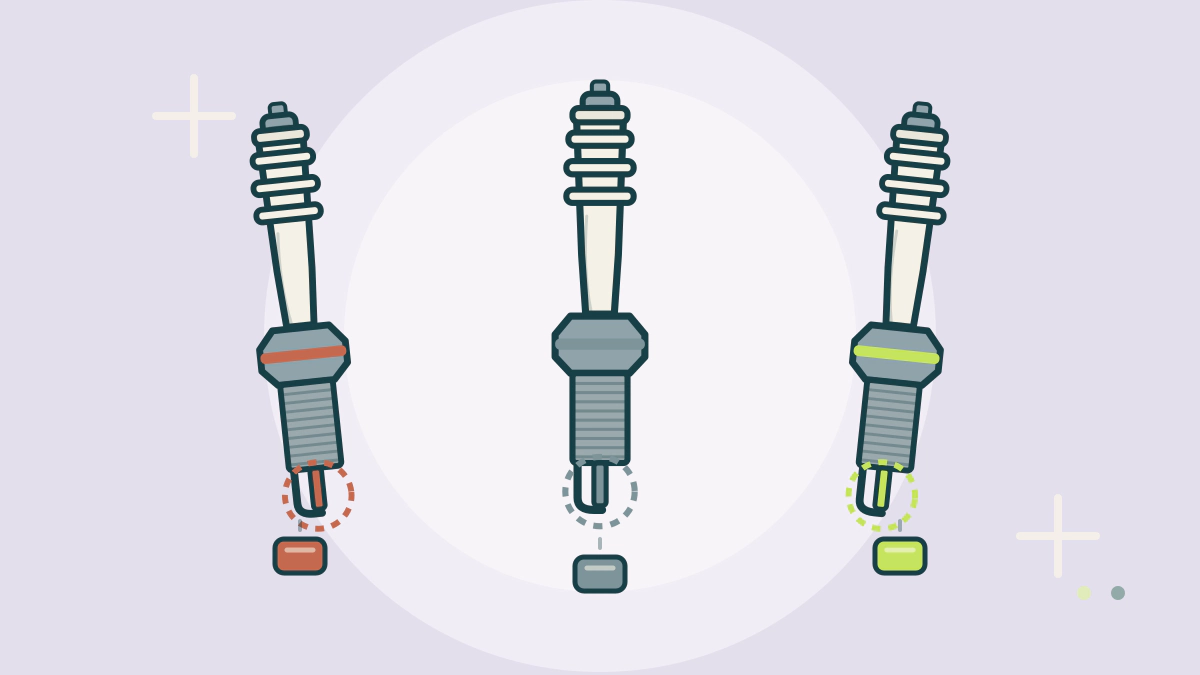
Compare copper, platinum and iridium spark plugs by electrode construction, heat range and gap, and learn why the engine's specified plug still governs.
What is the difference between copper, platinum and iridium spark plugs?
The label describes the electrode material, not the plug’s heat range or its suitability for your engine. Copper plugs use a nickel-alloy tip with a copper core, while platinum and iridium plugs add a precious-metal tip.
All three can spark. The practical differences are durability, tip design and cost. None of those overrides the specification in your owner’s manual.
Spark plug makers build many part numbers for many engines. A plug that fits the thread can still have the wrong reach, heat range or gap. Treat the material as one part of the choice, not the whole choice.
What “copper” means in a spark plug
A so-called copper spark plug does not use a pure copper electrode. NGK’s nickel spark plug page describes a v-groove center electrode and a core that is 98 percent pure copper.
The copper core helps conduct heat away from the firing end. The tip itself is a nickel alloy that resists spark erosion. This is the construction many people mean when they say copper plug.
Nickel-alloy plugs are common in older engines and in applications where the manufacturer specifies them. They can be the correct part even though they are usually the least expensive of the three types.
How platinum and iridium differ
NGK’s platinum page describes its G-Power plug as having a single platinum tip, a 98 percent copper core and a 0.6 mm fine-wire center electrode. It also uses a trapezoidal ground electrode.
NGK’s iridium page says iridium has an extremely high melting point and is suited to high-temperature engines. It describes a fine iridium tip for a stable spark.
| Type | Tip construction | Core | What it is suited to |
|---|---|---|---|
| Nickel (often called copper) | Nickel-alloy center electrode | Copper core | Applications that specify a nickel plug |
| Platinum | Platinum tip on a fine-wire electrode | Copper core | Applications that specify platinum |
| Iridium | Fine iridium tip | Not stated on the page | Applications that specify iridium |
The table is a summary of construction, not a ranking. A platinum or iridium plug is not automatically better for an engine that was designed around a nickel plug.
Heat range is a separate specification
NGK’s spark plug basics says heat range has no relationship to the electrical energy transferred through the plug. It is the range in which the plug works well thermally.
On NGK plugs, lower numbers are hotter and higher numbers are colder. The page gives an optimal firing-end temperature of about 500 to 800 degrees Celsius. It says one heat range step changes tip temperature by roughly 70 to 100 degrees Celsius.
A plug that runs too cold can carbon-foul. A plug that runs too hot can overheat and pre-ignite. Both are engine risks, so the heat range must match the engine, not the price of the plug.
The Kia 2026 K5 manual says to install new spark plugs of the correct heat range. It also says not to disconnect or inspect spark plugs while the engine is hot.
Gap and installation matter as much as the metal
NGK’s gap page says a plug part number can fit hundreds of engines. The factory gap may not be right for your particular engine.
The page says an incorrect gap can cause misfires, power loss, fouling, poor fuel economy and faster wear. It advises checking the gap against the manufacturer’s specification.
Fine-wire platinum and iridium plugs need care. NGK says not to apply pressure to the fine center electrode or insulator when adjusting the gap. Adjust only the ground electrode.
Installation torque also matters. NGK’s installation page warns that over-tightening can break the metal shell or damage the seals, while under-tightening can lead to overheating. Use the torque and procedure for your engine, not a generic number.
Why the owner’s manual still governs
The manual or manufacturer service information identifies the plug type, heat range and gap for your engine. It may also list a specific part number or a superscript code in the maintenance table.
That specification can call for a nickel, platinum or iridium plug. All three are legitimate when they are the specified part.
If the manual calls for a long-life iridium plug, installing a cheaper nickel plug with a different heat range is not a savings. If it calls for a nickel plug, an iridium plug is not automatically an upgrade.
Replacement timing is a separate decision. Our spark plug replacement interval guide explains how to read the schedule. If the engine misfires, see engine misfire symptoms before buying parts. The Car Parts hub lists related wear items.
Frequently asked questions
Is iridium better than platinum?
Not universally. Iridium has a high melting point and is used in fine-tip designs, but the engine’s specified heat range and part number still decide. A premium material in the wrong specification is not better.
Can I upgrade a copper plug to iridium?
Only if the replacement has the correct thread, reach, heat range and gap for the engine. Check the owner’s manual or manufacturer service information before changing material or part number.
Do new spark plugs need their gap checked?
NGK says the factory gap may not match your engine, so check it against the manufacturer’s specification. Fine-wire platinum and iridium plugs need care because the center electrode can be damaged.
Does plug material change the replacement interval?
The owner’s manual interval is the guide. Material can affect wear, but engine design and the specified plug determine the schedule. Do not extend the interval based on a package claim alone.