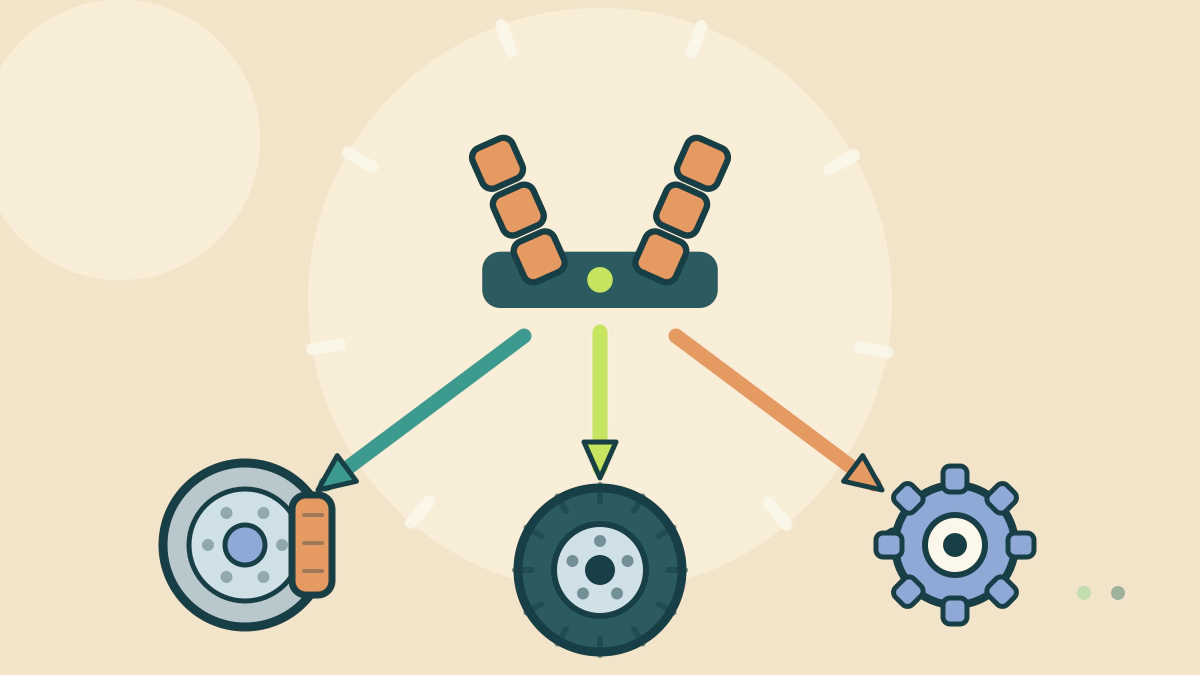
Plan an engine power increase around brakes, tires, cooling, fuel supply, driveline limits, insurance and warranty instead of the horsepower claim alone.
What should you check before adding engine power?
Check the systems that have to live with the extra power: brakes, tires, cooling, fuel supply, driveline, insurance and warranty. Power is easy to add and hard to add well.
This guide gives the order of checks, the manufacturer limits to look up, and a way to budget the supporting work.
Brakes and tires set the real limit
More power means more speed at the end of a straight, and stopping energy rises with speed. Federal safety standards give you the baseline. FMVSS 135 requires safe braking performance under normal and emergency driving conditions for passenger cars and for multi-purpose vehicles and trucks up to a gross vehicle weight rating of 3,500 kg (7,716 lb) (49 CFR 571.135).
The standard tests the vehicle loaded to its gross vehicle weight rating. In other words, the brakes were validated at the car’s maximum declared weight, not at a weight you added later. Wheels, tires, a bigger brake kit and audio equipment all count toward that number.
Tires carry their own limits. NHTSA explains that the speed rating is the speed at which a tire is designed to be driven for extended periods, and the load index is a measure of how much weight each tire can support (NHTSA). A higher top speed from a tune does not raise either rating.
Cooling and fuel supply are part of the power claim
Heat rises with power. The engine makes more heat, the oil works harder, the intake charge is hotter and the transmission fluid takes more load. A calibration that adds boost or timing also adds heat to components sized for the stock output.
The owner’s manual gives the manufacturer’s declared envelope. Towing capacity and payload figures are the clearest published limits, and they already account for cooling and structure. They do not rise when you add power.
Fuel supply matters in two ways. The pump and injectors have to deliver enough volume, and the fuel has to have enough octane. The 2027 Kia Telluride manual, for example, specifies 87 octane or higher and warns that damage from some fuels may not be covered (Kia fuel requirements). A tune may raise that requirement.
The driveline is rated for stock torque
An engine tune raises torque across the rev range, including in the low gears. The clutch, transmission, axles, driveshaft and engine mounts were chosen for the stock figure with a safety margin. Some fail under more load, and the repair is expensive.
Weight transfer makes it worse: a stronger engine loads the rear tires harder, which is when a weak mount gives up. Before any power increase, inspect the mounts and driveline for wear.
Weight and balance change with the build
Every supporting part adds mass. Bigger brakes, wider wheels and a roll bar all move the car away from the figure the manufacturer tuned. That is why power-to-weight ratio is a better comparison than horsepower alone. The power-to-weight ratio guide explains how to do that arithmetic honestly.
Balance matters as much as total weight. Mass at the front changes turn-in and braking stability, and mass placed high raises the center of gravity. If the car is also your daily driver, keep the comfort and visibility costs low.
Emissions, warranty and insurance are part of the build
An engine power increase usually touches the calibration. EPA’s enforcement program treats aftermarket defeat devices as illegal, and it notes that calibrations managing fueling are part of how a vehicle meets emission standards (EPA). A part or file that disables a control is not a street-legal upgrade.
Warranty is separate from emissions law. Kia’s manual says modification-related damage may not be covered (Kia vehicle modifications). The FTC says a manufacturer must prove an aftermarket part caused the damage before denying coverage for it (FTC).
Insurance is the third piece. Tell your insurer before the work and ask what it will cover. The guide to how modifications affect insurance coverage covers disclosure in more detail. More modification planning sits under Car Modifications and Tuning.
A staged budget with illustrative numbers
The table below is a planning example, not a price list. The figures are placeholders you replace with your own quotes. The point is the ratio: supporting work often costs more than the part that makes the power.
| Stage | What it includes | Illustrative budget | What it can expose |
|---|---|---|---|
| 1. Baseline | Service, tires, brakes, fluids, inspection | $1,000 | Worn parts you would have found later |
| 2. Breathing | Intake and exhaust hardware | $1,500 | Emissions paperwork and noise limits |
| 3. Calibration | Tune, fuel requirement, data logging | $1,000 | Octane cost and warranty position |
| 4. Support | Cooling, brakes, driveline, mounts | $3,000 | The real limit on a reliable build |
The stage numbers are examples meant to show that stage four can exceed the first three combined.
Frequently asked questions
How much power can I add safely?
There is no universal number. The safe amount depends on the engine, transmission, cooling system and how you drive. A tuner with your model’s data can say what the standard hardware tolerates, and a diagnostic log after installation shows whether the margin is real.
Do I need bigger brakes if I add power?
Not always, but you should check. Brakes are validated at the vehicle’s gross vehicle weight rating, and stopping energy rises with speed. If the car is heavier or faster, the standard brakes may lack margin.
Does adding power affect my insurance?
It can if the change affects the risk or the repair cost the policy covers. Tell your insurer before the work and get the answer in writing, because an undisclosed change can complicate a claim.
Will a power increase void my warranty?
Not automatically. The FTC requires the manufacturer to prove an aftermarket part caused the damage before denying coverage for that damage. However, manufacturer manuals often say modification-related damage is excluded, and software may be treated differently from a part.