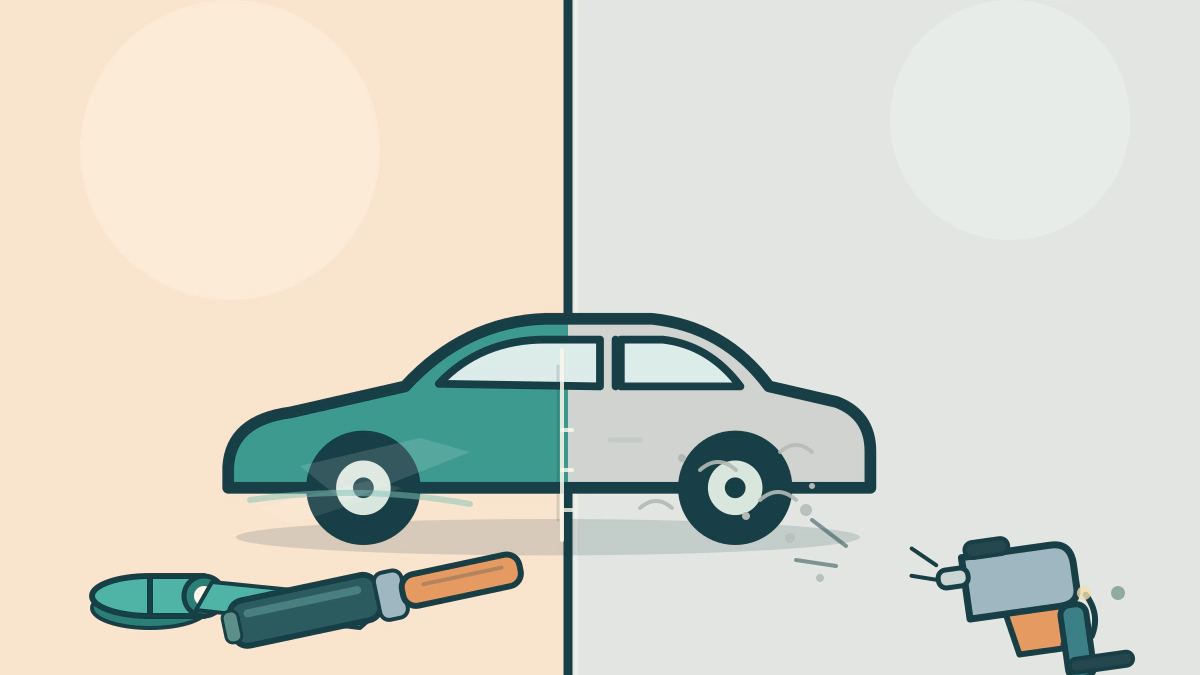
Compare vinyl wrap and repaint on cost, rated life, removal risk and paint condition, plus when a color change needs a DMV update.
Is a wrap cheaper than a repaint?
Usually a wrap costs less than a quality repaint, but the ranges overlap and a cheap repaint can undercut a good wrap. AAA puts a basic vinyl wrap at $500 to $5,000 and a professional paint job at $3,000 to $20,000 or more. AAA also lists mid-grade paint at $1,000 to $4,500, which is inside the wrap range.
So ask which finish, at what quality, for how long. A wrap is a film over the existing paint. A repaint replaces the old finish. These are the same trade-offs behind most Car Modifications projects.
What AAA’s cost ranges actually show
AAA separates paint work into three levels. A basic job at $300 to $1,000 includes one coat and minimal preparation. A mid-grade job at $1,000 to $4,500 adds better prep and multiple coats. A high-end job at $5,000 to $20,000 includes stripping to bare metal, multiple premium coats and custom work.
The wrap figure is a single range, not a quality scale. Film type, vehicle size, disassembly and labor change the quote. AAA still concludes that wrapping is typically cheaper than painting, especially for a temporary look.
How long each finish lasts
3M rates its 2080 wrap film by warranty zone and surface angle. In Zone 1 the film carries an 8-year warranty on vertical surfaces and 3 years on horizontal surfaces. Zone 2 is 7 years vertical and 2 horizontal; Zone 3 is 6 years vertical and 1 horizontal. The roof and hood are the horizontal surfaces, so they age out first.
That is a film warranty, not a promise that every wrap will look new for eight years. AAA says paint is more durable in the long run. A wrap is the shorter-lived finish, and its life depends on sun, washing and whether it was installed over sound paint.
Wrap removal and the paint underneath
3M recommends professional removal. Its film is removable within the warranty period if it has not been printed or covered with an overlaminate. Heat or chemicals may be needed, and some adhesive residue can remain.
3M says the film should not damage an OEM paint finish when it is used, applied, maintained and removed per its instructions within the warranty period. The warranty itself excludes paint pull during removal, so the risk is not zero. Old or failing film is harder to remove cleanly.
Paint condition decides whether a wrap is suitable at all. 3M says films should be applied to a like-new finish. Rust, bubbling, scratches and dents show through the film and can cause it to fail early. A wrap is not a bodywork shortcut.
Repaint prep and what a wrap cannot hide
A repaint can fix the surface underneath because the old finish is sanded, primed and replaced. That is why a repaint costs more and why it can outlast a wrap. It is also permanent, so a later color change means another repaint.
A wrap preserves the factory paint while it is on, but it follows every defect below it. Fix peeling clear coat or rust first. If the paint is sound and the goal is protection, paint protection film and ceramic coating are different products.
The registration question after a color change
Some states require a registration or title update after a color change. Indiana’s BMV now requires owners to update their registration when paint or a partial or full vinyl wrap changes the vehicle’s exterior color, and the statute sets a 30-day window. Removing a wrap is covered too.
Rules differ by state. Check your state DMV before booking the work, and keep the receipt. A color that does not match the registration can create a problem at a traffic stop or a resale.
Comparing the two finishes
| Factor | Vinyl wrap | Repaint |
|---|---|---|
| Typical professional cost | $500 to $5,000 (AAA) | $3,000 to $20,000 or more (AAA) |
| Mid-grade comparison | Often below a quality repaint | $1,000 to $4,500 (AAA) |
| Rated life | 6 to 8 years vertical, 1 to 3 horizontal by 3M zone | AAA calls paint more durable long term |
| Reversible | Yes, with professional removal | No |
| Prep needed | Sound, like-new paint | Bodywork and paint prep included |
| Best for | A temporary color or preserved factory paint | A permanent finish |
The care routine also differs. A wrapped car needs hand washing and wrap-safe products, while a painted car can use our scratch-free wash guide. If paint has gone dull, polishing may restore it, and a wax or ceramic coating can slow the decline.
Frequently asked questions
Is wrapping a car cheaper than painting it?
Usually, yes, if you compare a wrap with a quality repaint. AAA puts a wrap at $500 to $5,000 and paint at $3,000 to $20,000 or more. A mid-grade repaint at $1,000 to $4,500 can still be cheaper than an expensive wrap, so compare quotes for the same coverage.
How long does a vinyl wrap last?
3M’s warranty for its 2080 film runs 6 to 8 years on vertical panels and 1 to 3 years on horizontal panels, depending on the zone. Real life depends on sun, washing and installation. The roof and hood usually need attention first.
Does removing a wrap damage paint?
Not if the paint was sound and the film is removed within its service life by a professional using the maker’s method. 3M says its film should not damage OEM paint under those conditions, but its warranty excludes paint pull during removal. Damaged or failing paint raises the risk.
Do I have to tell the DMV after a wrap?
Some states require it. Indiana requires a registration update within 30 days when paint or a wrap changes the vehicle’s color, including wrap removal. Check your own state DMV before the work, because the rules are not uniform.