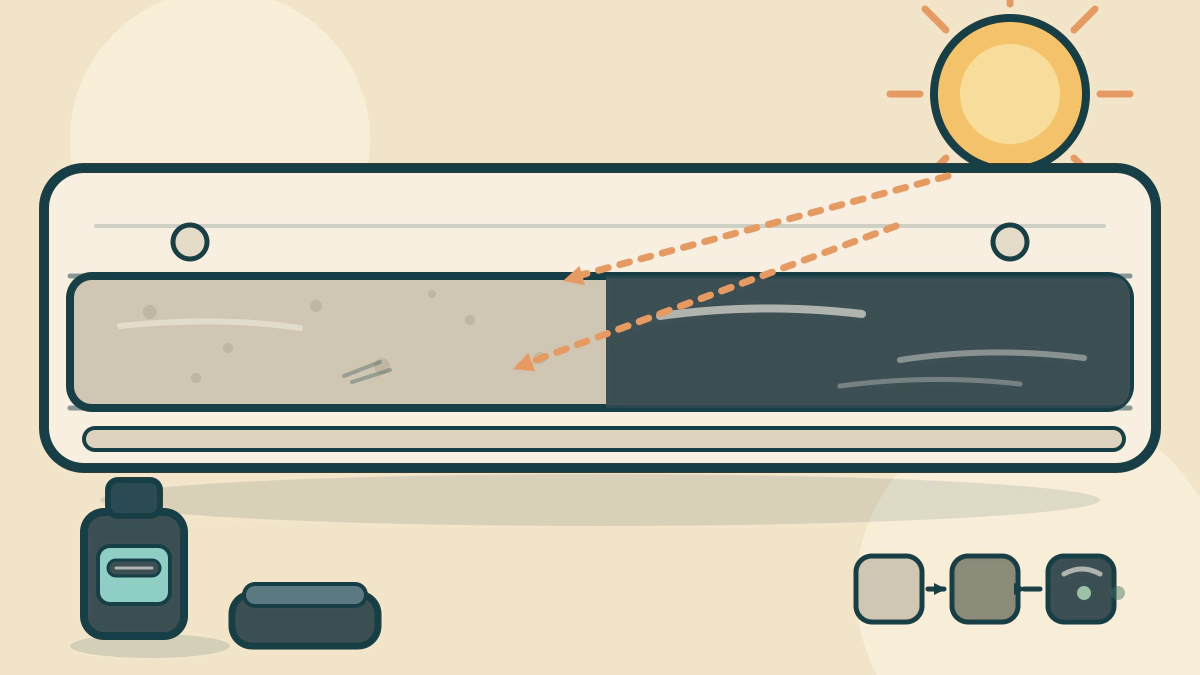
Learn why exterior plastic trim fades, how protectants, coatings, dyes and replacement parts differ, and how to avoid silicone stains and uneven results.
How do you restore faded exterior plastic trim?
Clean the trim first, then choose a protectant, a coating or dye, or a new part. A protectant hides light fade for weeks, a coating lasts longer, and replacement is the only permanent repair. The right choice depends on how gray the plastic is and how much work you want to repeat.
This guide covers the trim itself. For the paint around it, see how to wash a car without scratching paint. More exterior topics sit under Car Detailing and Protection.
Why exterior plastic fades
Sunlight does most of the damage. Ultraviolet light breaks the chemical bonds in a surface, and color fades as those bonds fail. Gold Eagle describes the process for automotive surfaces as photodegradation, with oxidation adding a chalky, washed-out look (Gold Eagle).
Bare plastic trim has little to shield it from that energy. It also faces wash chemicals, road salt and high-pressure spray. Hyundai’s 2026 owner’s manual says not to clean plastic parts with chemical solvents or strong detergents, and warns that high-pressure water can damage vehicle trim (Hyundai manual).
Clean before you judge the fade
Dirt and old dressing can look like fade. Wash with mild soap and water, rinse, and let the trim dry. Hyundai’s manual calls for mild soap and warns against strong detergents and washing in direct sunlight.
Mazda’s 2024 CX-50 manual adds a useful spray rule: keep the nozzle at least 30 cm (12 in) from the vehicle, because a close high-pressure blast can damage or deform the molding (Mazda manual).
Then check for damage that no dressing will fix: cracks, deep scrapes, missing clips, or trim that has lifted from the body. Those call for repair or replacement.
| Option | What it does | How long it lasts | Best for |
|---|---|---|---|
| Protectant or dressing | Adds a UV-filtering film and restores color | About 30 to 45 days per the 303 label | Light fade and routine upkeep |
| Acrylic trim coating | Bonds a film that matches the OEM texture | Depends on prep and exposure | Moderate fade on textured trim |
| Flexible dye or coating | Adds a new color layer over the old surface | Depends on prep and wear | Badly faded or mismatched trim |
| Replacement trim | New part with a factory finish | Until the new part weathers | Cracks, deep damage, missing clips |
What a protectant can and cannot do
A protectant is the least invasive option. 303 Automotive Protectant, made by Gold Eagle, is marketed for rubber, vinyl and plastic. The company says it provides UV protection and reduces fading, and the label says to reapply every 30 to 45 days (303 product page).
That interval matters. A dressing sits on the surface, so washing, rain and sun wear it away. A protectant improves appearance; it does not restore pigment.
Follow the label. 303 says not to use its protectant on clear plastics, gauge panels or headlights. Products differ, so read the can rather than assuming every dressing is safe on every surface.
When a coating or dye is the better answer
A coating goes further. SEM Trim Black is an acrylic coating formulated to match the OEM finish on trim, and the company lists plastic among its applications (SEM Trim Black). Unlike a dressing, it forms a film rather than a layer of oil.
Preparation decides the result. The surface must be clean and free of old dressing, and the product’s technical data sheet governs drying and recoat times. A coating applied over silicone residue may not adhere evenly.
A flexible dye adds a new color layer instead of darkening the old one. It is less forgiving: uneven prep shows, and a poor color match is hard to hide.
If you are not comfortable with surface prep, a professional detailer is the safer route. The cost of professional detailing explains what a shop typically includes.
Silicone, overspray and staining
Silicone is the ingredient to watch. 303 says its protectant contains no harmful silicone oils, which it says can dry out and damage surfaces, and it markets the product as repelling stains. A heavy silicone film can also collect dust and streak adjacent paint or glass.
Keep the product on the trim. Mask or wipe adjacent paint, and buff off excess before it dries. Do not let overspray bake on glass or in panel gaps.
Test any product on a hidden section first; trim materials vary, and a product can dry unevenly.
When replacement makes more sense
Replacement is the permanent fix. A new grille, wheel-arch molding or bumper insert arrives with the factory finish, and it does not depend on prep or reapplication.
It is also the right call when the plastic is physically damaged. Cracks, broken tabs and deep gouges will still show through a coating.
Check the part number with a dealer or the manufacturer’s parts catalog; prices vary widely, so get a quote.
Frequently asked questions
How often should I reapply trim protectant?
Every 30 to 45 days is the interval 303 gives for its Automotive Protectant. Reapply sooner if washing or weather removes the finish. A coating or dye follows its own label, not that schedule.
Will a trim restorer stop the plastic from fading again?
No. A protectant slows the look of fade while it is on the surface. Ultraviolet light still reaches the plastic once the product wears off. Parking in shade helps more than any dressing.
Can I use the same product on textured and smooth trim?
Not always. Follow the label for the surface type, and test on a hidden area. 303, for example, says not to use its protectant on clear plastics or headlights.
When should I replace trim instead of restoring it?
Replace it when the part is cracked, has broken clips or deep gouges, or has lifted from the body. A dressing or coating cannot repair structure, and a loose trim piece can trap water or detach at speed.