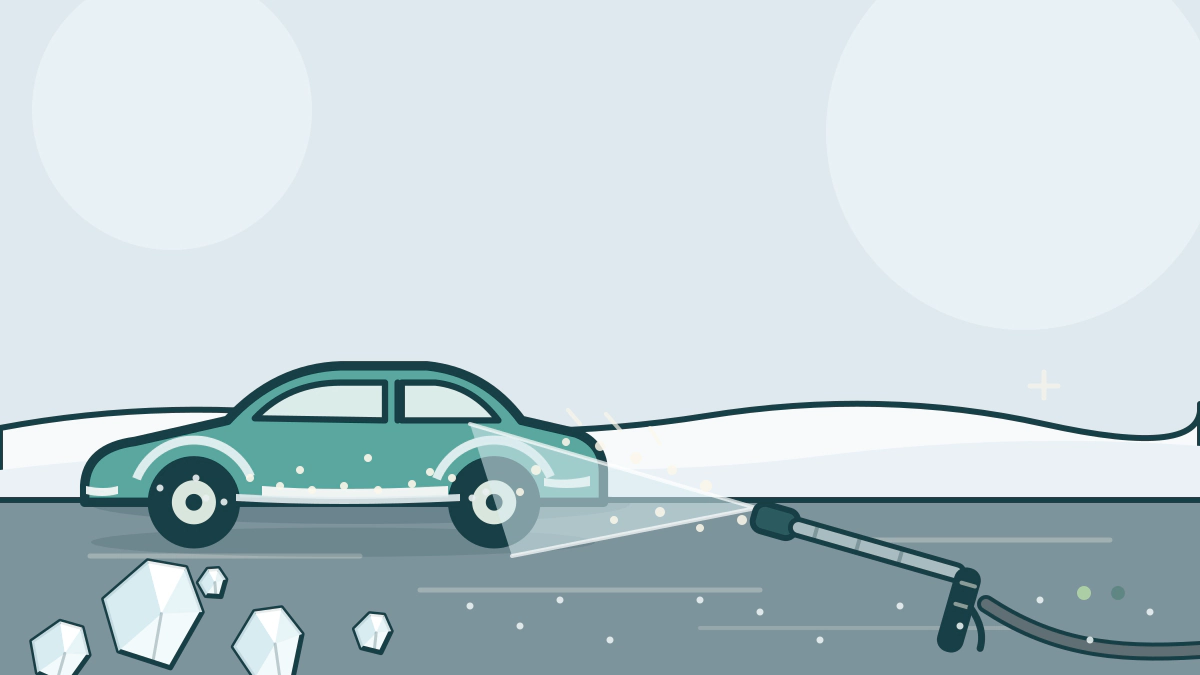
Learn why road salt damages metal, when state DOT and owner's manual guidance says to wash, and how to flush the underbody, wheel wells and drain holes.
How do you remove road salt from a car?
Flush the underside and wheel wells with lukewarm or cold water, wash the painted surfaces and glass, and repeat through winter. Salt and mud that stay in hidden areas keep moisture against the metal, so a quick rinse of the visible body is not enough.
Why road salt matters for the whole car
Hyundai’s 2026 owner’s manual lists road salt, dirt and moisture that accumulate underneath the vehicle as common causes of corrosion. It says corrosive materials used for ice and snow removal can collect on the underbody and cause accelerated rusting of fuel lines, frame, floor pan and exhaust system, even when those parts have rust protection.
Corrosion is accelerated by high humidity, especially just above freezing, because moisture stays in contact with the metal; mud holds it there.
That is why washing the paint alone is not enough: salt sits in fender wells, rocker panels and frame areas you cannot see.
When should you wash a salted car?
The Virginia Department of Transportation advises washing a vehicle if it comes into contact with the chemicals used to pretreat roads, to protect the finish.
Owner’s manuals give the routine. Hyundai’s 2026 manual says to hose off the underside at least once a month in winter and to clean it thoroughly when winter is over. It also says to wash the whole vehicle at least monthly and after each off-road trip. Mazda’s 2024 CX-50 manual says to wash at least monthly and to pay special attention to salt, dirt and mud under the fenders and around the door and rocker-panel drain holes.
Wash sooner when the roads are wet with brine or slush.
Step 1: flush the underside first
Start with the underside and wheel openings, using lukewarm or cold water as the Hyundai manual specifies. Work along the fenders, rocker panels, frame rails and behind each wheel.
Hyundai’s manual warns that dampening mud without washing it away can do more harm than good, because it keeps moisture against the metal.
A garden hose with a fan spray can reach most of the underside. Hyundai’s manual warns that high-pressure water can damage cameras, sensors, trim, rubber boots and connectors, so keep the nozzle moving and avoid direct blasts at electrical parts.
Step 2: wash the body and glass
Wash the car from the top down with a mild car shampoo, a clean mitt and plenty of rinse water. Do the wheels and wheel wells last so you do not carry grit onto the paint.
Mazda’s manual warns not to spray water into the engine compartment, and Hyundai’s adds that it may cause electrical circuit failure. Keep the hood closed.
Hyundai also says not to use strong soap, chemical detergents or hot water, and not to wash in direct sunlight or when the body is warm. Dry the car with a clean microfiber towel, then dry the brakes by applying them lightly while moving slowly forward.
For the full hand-wash sequence, see how to wash a car without scratching paint.
Step 3: clear the drain holes
Hyundai’s manual points to the drain holes in the lower edges of the doors, rocker panels and frame members; if they clog, trapped water can cause rust.
After washing, check that water drains freely; a soft brush or low-pressure rinse can clear loose debris.
A winter washing schedule that fits the weather
| Condition | What to do |
|---|---|
| Roads treated with brine or salt | Rinse the underside and wheel wells as soon as practical |
| Normal winter driving | Full wash at least once a month, including the underside |
| Heavy slush or mud | Wash sooner; do not let the material dry in place |
| End of winter | Thorough underside flush, including fenders and drain holes |
| Coastal driving or off-road use | Rinse after the trip, not at the end of the month |
The schedule is a minimum; a car driven daily on treated roads needs more rinses than a garage-kept car.
What not to do
Do not rely on rust protection alone. Hyundai’s manual says the corrosive materials must still be removed, even on a treated underbody.
Do not skip the wheel wells, where salt and mud collect.
Do not use strong soap, chemical detergents or hot water on a warm panel; follow the product label.
When to have the underside inspected
Look for scale, bubbling paint or a soft spot on the rocker panels and frame. Brake and fuel lines are harder to see; if you find heavy rust or a damp line, have a technician inspect it. Cleaning is not corrosion repair. The Car Detailing and Protection hub covers related exterior care, and paint decontamination explains how bonded material is removed from paint.
Frequently asked questions
Does rain wash road salt off my car?
Rain wets the body but may not flush the fender wells, rocker panels and frame areas. The owner’s manual calls for a deliberate underbody rinse, so treat rain as a reason to wash, not as a substitute.
How often should I wash my car in winter?
Hyundai’s manual says to hose off the underside at least once a month in winter, and both Hyundai and Mazda call for a full wash at least monthly. Wash sooner after driving on heavily treated roads.
Is a car wash undercarriage rinse enough?
Only if it actually sprays the underside and wheel openings. Ask what the package covers. A basic exterior wash may clean the paint and leave the salt-bearing areas untouched.
Does rust protection mean I can skip underbody washing?
No. Hyundai’s manual says corrosive material can cause accelerated rusting even on underbody parts that have rust protection. The coating helps, but the salt still has to be removed.
Bottom line: wash for the parts you cannot see. The underside, wheel wells and drain holes decide whether winter salt becomes a cosmetic nuisance or a structural repair.