Compare mobile detailing with a fixed shop on water and power access, workspace, paint-correction capacity, insurance, written quotes and travel fees.
Which is better, a mobile detailer or a detailing shop?
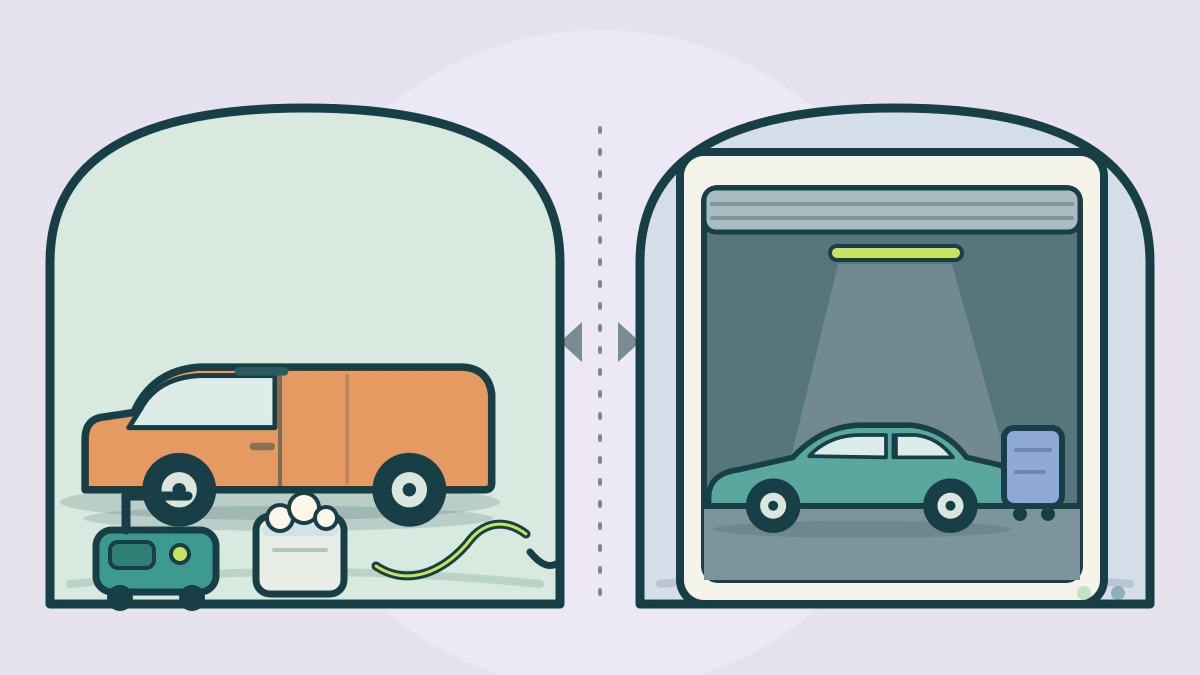
Neither is universally better; the job and the working space decide. A mobile detailer brings the service to your driveway or parking lot. A fixed shop gives the car a controlled bay, fixed utilities and room for longer work. Compare the scope you need before you compare the price.
A maintenance wash and a multi-stage correction are different jobs, and only one may fit in a driveway.
What a mobile unit has to bring
A mobile detailer works without the building’s water, power and drainage. Ask whether the vehicle carries its own water tank and generator or expects to use your spigot and outdoor outlet.
The International Detailing Association lists pressure washers, hot water extractors, steamers, polishers and wet/dry vacuums among the equipment a detailing business may need. A compact setup may carry only part of that list.
Ask where the wash water goes, and whether the unit contains runoff or lets it run across the driveway.
Space matters too. The car needs level ground, shade and room to open doors. Wind can blow product onto nearby cars, and direct sun can dry soap on the paint before it is rinsed.
What a fixed shop adds
A shop controls the environment. It can offer an indoor bay, fixed lighting, drainage, compressed air and a place to leave the car while a coating cures.
That control matters most for paint work. Correction needs bright, consistent light and enough room to inspect each panel. A driveway under a tree may be fine for a wash and a wax, but poor for judging swirl marks.
Indoor space also protects the schedule. Rain, snow, wind or a cold snap can stop mobile work. A shop can usually continue.
The IDA’s procedure page makes a related point. Its published order of operations is a baseline to adjust for weather, workplace, vehicle and chemicals. The workplace changes what a detailer can safely do.
Compare the access, terms and paperwork
| What to check | Mobile detailer | Fixed shop |
|---|---|---|
| Water and power | Ask if the unit is self-contained or needs your spigot and outlet | Building utilities; confirm bay availability |
| Space and weather | Needs level, shaded ground; rain, wind or cold can stop work | Indoor bay reduces weather risk |
| Paint correction | Possible if the unit carries a polisher and proper lighting; confirm | Usually more room and better inspection lighting |
| Drop-off | Car stays with you; no shuttle needed | You leave the car; confirm keys and pickup time |
| Insurance and damage | Ask for a certificate and a walk-around before work | Same, plus where the car is parked overnight |
| Quote and payment | Itemized written quote; confirm travel fee, deposit and cancellation terms | Itemized written quote; confirm deposit and storage terms |
Ask whether a travel fee applies, and whether it changes for a longer distance or a second vehicle. Get the total with the trip included.
Five questions to settle before booking
- What exactly is included, item by item?
- Will you use my water and electricity, or bring your own?
- Can you show a certificate of insurance and note existing damage?
- What is the total, including travel, and what deposit is required?
- Who will perform the work, and which products will be used?
Ask for the answers in writing. A text message or emailed quote is enough if it lists the scope, price and cancellation terms.
The IDA code of conduct says member businesses agree to follow local regulations that govern their operations, including personnel safety. Membership is a useful signal, but it does not replace your own check of insurance and written terms.
When the mobile option fits
Mobile service suits a car that is already in good condition. A maintenance wash, interior vacuum, glass cleaning and a spray sealant can be done in a driveway with the right equipment.
It also helps when you cannot leave the car, such as in a one-car household or with shared parking.
When the shop is the better booking
Book a shop when the paint needs correction, when upholstery needs extraction, or when the car will stay overnight for a coating to cure. To see what those steps normally cover, read what is included in a full car detail.
A shop is also the better choice when the weather is unreliable or the parking area has no shade, power or water. Do not ask a mobile detailer to improvise around a hazard.
If you are still deciding how much correction the paint needs, read when car paint needs polishing. For a breakdown of how quotes are built, see how professional detailing is priced. Start with the Car Detailing and Protection hub if you need the broader care routine.
Frequently asked questions
Is a mobile detailer cheaper than a shop?
Not reliably. Compare itemized quotes for the same scope. A mobile quote has to cover travel and setup as well as labor, while a shop quote may include services you do not need. The headline package price does not settle it.
Can a mobile detailer do paint correction?
Some can. Ask whether the unit carries a machine polisher, enough lighting and a power source. Multi-stage correction is harder in a driveway, so confirm the number of steps and the expected result before booking.
Do I need to provide water or electricity?
Only if the detailer says so. Some units are self-contained; others need a spigot and an outdoor outlet. Confirm the day before, and clear the driveway and any hose route.
What happens if it rains?
Ask before you pay. A mobile booking may move to another date, move under cover or convert to an interior-only service. Get the cancellation and reschedule terms in writing.
Bottom line: choose the setting that can safely support the work, then compare written scopes. Convenience is worth paying for only when the job still fits the space.