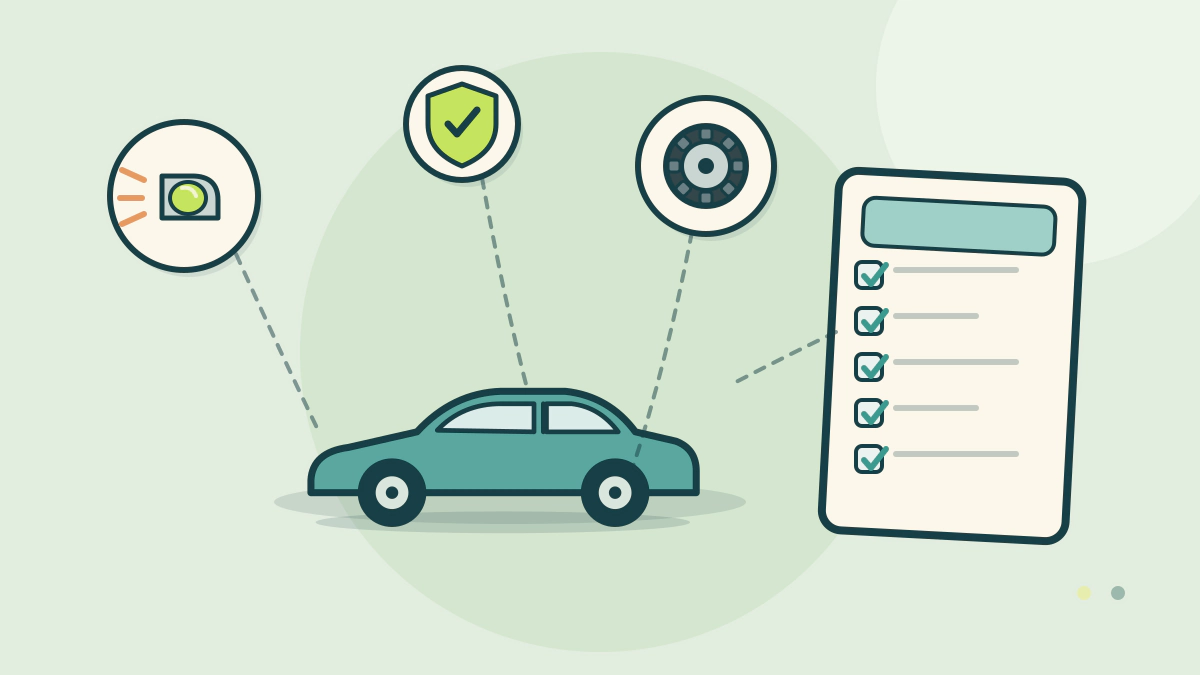
Check road legality in layers: title and VIN history, registration and insurance, inspection and emissions, safety equipment and open recalls.
Is there one national road-legal certificate?
No. The United States does not issue a single road-legal certificate for a used car, so legality has to be checked in layers. NHTSA sets Federal Motor Vehicle Safety Standards for new vehicles and equipment, while each state controls titling, registration, inspection and insurance.
That split explains why a car can be legal in one state and need work in another. A vehicle that passes a safety inspection may still have an open recall, a branded title or no valid insurance. The Vehicle Registration hub covers the wider ownership process.
Start with the title and VIN history
The title is the first document to verify. Check that the VIN on the certificate matches the VIN plate on the dashboard and the sticker on the driver’s door jamb. Confirm the seller’s name and look for a recorded lien.
Then pull an NMVTIS report. It covers five indicators: current title and last title date, brand history, odometer reading, total loss history and salvage history. Brands are state labels such as junk, salvage and flood.
A branded title does not always make a car illegal to drive, but it changes what the car is worth and what the state will require before registration. The guide to salvage versus rebuilt titles explains that difference.
Confirm registration, insurance and tax status
A current registration shows that the vehicle has permission to use public roads, but it must be in the seller’s name and must match the car. Ask for the registration card and compare the plate, VIN and owner details.
Insurance is usually required before registration. Texas asks for proof of liability insurance when a buyer titles and registers a vehicle. California requires insurance on any vehicle operated or parked on its roads, and insurers report coverage electronically (CA DMV).
The buyer also needs to know the transfer deadline. California gives a private-party buyer 10 days to transfer ownership, while Texas requires the vehicle to be titled in the buyer’s name within 30 days. Miss the deadline and penalties can follow.
Check inspection and emissions rules where the car will live
Inspection is a state and local rule, not a national one. New York requires most registered vehicles to pass a safety and emissions inspection every 12 months at a DMV-licensed station, and the valid sticker must be displayed (NY DMV).
Texas illustrates how local the rule can be. Non-commercial vehicles in 17 named counties must pass an emissions inspection before registration, while other counties do not require that emissions test.
California requires a smog certification for a private-party title transfer. The certificate is part of the registration packet along with the signed title, odometer record, fees and use tax.
Use the state inspection guide to find the rule for the state where the car will be registered. Do not rely on the seller’s inspection from another jurisdiction.
Verify equipment, recalls and safety defects
Walk around the car and check the equipment that state inspections usually cover: lights, turn signals, brake lights, tires, brakes, horn, mirrors, seat belts and the windshield. A test drive should include braking and steering at low speed, but a professional inspection is better evidence than a parking-lot check.
Run the VIN through NHTSA’s recall search. A recall is a safety defect notice, and an open recall may be repaired at no cost by a franchised dealer.
Federal standards set a floor for new vehicles, not a lifetime guarantee. FMVSS rules cover areas such as brakes, lamps, glazing, tires and stability control. A modified car can meet those standards when built and still fail a state equipment rule later. The modification legality guide covers that separate question.
Treat salvage, rebuilt, kit and imported cars as special cases
These vehicles rarely fit the ordinary checklist. A rebuilt title may require a state salvage examination before registration. A kit car may need a state-assigned VIN. An imported vehicle may need to meet federal safety and emissions requirements or qualify for an exemption.
Ask the state agency which inspection, bond or supporting document applies before buying. A low price can reflect a paperwork problem rather than a mechanical one.
Use one table to organise the checks
| Layer | What to check | Where to verify |
|---|---|---|
| Ownership | Title, VIN, seller name, lien | Title certificate and NMVTIS |
| Registration and insurance | Current plate, owner, active liability coverage | Registration card, insurer and state agency |
| Inspection | Safety and emissions status | State DMV or inspection station |
| Equipment | Lights, tires, brakes, belts, glass | Physical inspection |
| Recalls | Open safety recalls by VIN | NHTSA recall search |
| Title brand | Salvage, rebuilt, flood or junk | NMVTIS report and state agency |
Keep copies of every result. A clean report is useful at resale, and a documented defect is useful if a seller misrepresented the car.
Frequently asked questions
Can a car be road-legal without a title?
Not usually. Most states require a title to register a vehicle, and a bill of sale alone does not establish ownership. Some older vehicles qualify for a title exemption, but the buyer should confirm that rule with the state before paying.
Does passing an inspection make a car road-legal?
No. An inspection covers the items the state tests on that day. It does not prove clear ownership, valid insurance, a clean title brand or that every recall has been repaired. Those are separate checks.
Can I drive a car home before registering it?
Only if the state allows it and you have the right permit or transferable registration. Rules differ, and driving without registration or insurance can lead to a citation or impound. Ask the state agency before driving.
Is a salvage-title car ever legal to drive?
Sometimes, after the required state process. A salvage vehicle may need repairs, a salvage examination and a rebuilt title before registration. The rules vary, so confirm the exact path with the state that will issue the title.