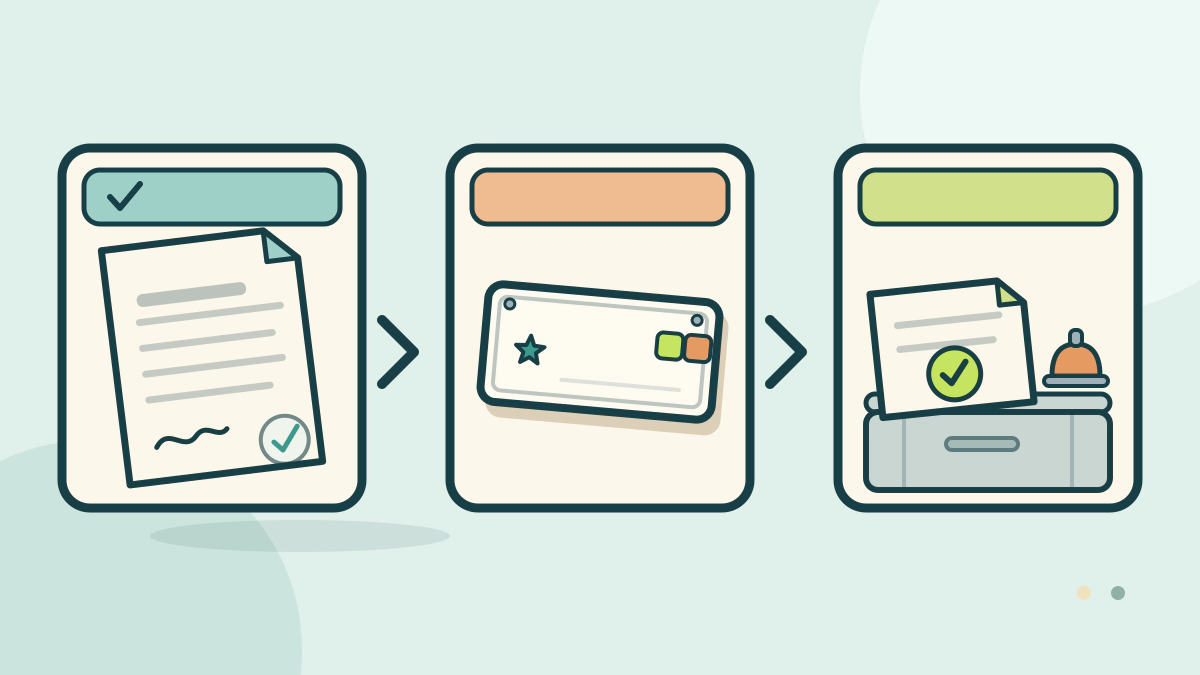
Register a newly bought car by using the signed title, bill of sale, insurance and inspection, then filing for title and plates in your state.
What is the first step after buying a car?
Take the signed title and proof of sale, add insurance and any required inspection, then apply for title and registration in the state where the car will be kept. A licensed dealer often files part of this for you. A private purchase usually leaves the filing to the buyer.
The sequence is similar across states, but the deadlines and forms are not. California, New York and Texas are used as examples below, checked on November 9, 2026. Confirm your own state’s requirements before you sign.
Dealer and private sales split the work differently
California’s DMV says a licensed dealer may take care of certain registration tasks for a buyer. New York’s DMV is more direct: if you buy from a dealership, you do not need to visit a DMV office to register, because the dealer can register and title the vehicle and issue plates for a fee. A private sale is different in both states. The buyer files the transfer.
Check that the dealer actually submitted the paperwork and that the title arrives in your name. Keep the temporary registration or plate authority in the car until the permanent documents arrive.
Build the paper chain before you pay
A private sale needs a title signed by the seller in the transfer section. New York asks for proof of sale and proof of ownership, and describes a bill of sale with the year, make, VIN, sale date, price and both signatures. California’s private-party guidance asks for the signed title, odometer mileage if the car is less than 10 years old, and a smog certification.
For a new car, the ownership document may be a Manufacturer’s Certificate of Origin rather than a title. New York’s DMV describes the MCO or MSO as the proof for a new vehicle from a dealer.
If a loan is on the car, get a lien release. A title that still names a lender is not clean ownership evidence.
| Step | Dealer sale | Private sale |
|---|---|---|
| Title transfer | Dealer usually prepares it | Buyer files the signed title |
| Bill of sale | Dealer supplies a buyer’s order | Buyer and seller sign one |
| Sales tax | Collected or arranged by dealer | Buyer pays at registration |
| Inspection | Dealer may arrange safety items | Buyer arranges state inspection |
| Plates | Dealer may issue or transfer | Buyer applies at the office |
| Registration receipt | Dealer may provide | Buyer receives at the office |
Insurance and inspection come before the counter
New York requires insurance before registration and sets a 180-day limit from the effective date on the insurance ID card. It also issues a 10-day inspection extension at registration, and the previous owner’s inspection does not carry over. Texas requires an emissions inspection in 18 named counties before registration, while non-commercial vehicles no longer need a safety inspection there. California’s private-party checklist includes a smog certification.
Ask the office which inspection applies to your county and model year.
Taxes and fees are calculated when you title
Registration usually combines a title fee, a registration or plate fee, and sales or use tax. The amounts depend on the vehicle, your county and the price you paid. Texas, for example, publishes a base registration fee for passenger cars and light trucks plus title, local and tax items, but the total varies by county.
Use your state’s official fee calculator rather than a blog estimate. Keep the bill of sale because the tax is often based on the price, not the seller’s asking price. If the price looks unusually low, expect the office to ask why.
Deadlines start at the sale, not at your convenience
California gives a private-party buyer 10 days to transfer ownership. Texas requires a title application within 30 days of the sale date and registration within 30 days of bringing the vehicle to Texas. New York ties registration to the insurance card date rather than a purchase deadline.
Missing a deadline can add penalties or leave you without valid plates. Ask about a temporary permit if the title or inspection will take longer. Do not drive on plates that belong to the seller.
When the paperwork goes wrong
A seller who cannot produce a title, a title with a name that does not match the seller’s ID, or a title with an unexplained brand are reasons to stop. Read How to Sign Over a Car Title before you meet a private seller, and check Car Title vs Vehicle Registration if you are unsure which document you are holding.
A dealer that fails to deliver the title is a different problem from a private seller who never had one. Private Seller vs Used Car Dealer explains the trade-off. The Vehicle Registration and US Legal Guides hub lists more state and title guides.
Frequently asked questions
Can I register a car the same day I buy it?
Sometimes. It depends on whether you have the signed title, insurance and any required inspection. A dealer may complete the filing for you, while a private buyer usually needs an office visit.
Do I need a bill of sale if the title is signed?
Many states ask for one, especially when the title lacks a price or the seller is not the titled owner. It also helps if the office questions the purchase price.
What if the seller still owes money on the car?
The seller needs to pay off the loan and obtain a lien release, or follow the lender’s process for a title transfer. Do not accept a title that still lists a lender as the legal owner without a release.
How long can I drive before registering?
That varies by state. Some issue a temporary permit, some allow a short grace period, and some expect registration before you drive. Ask your DMV before you take the car on the road.