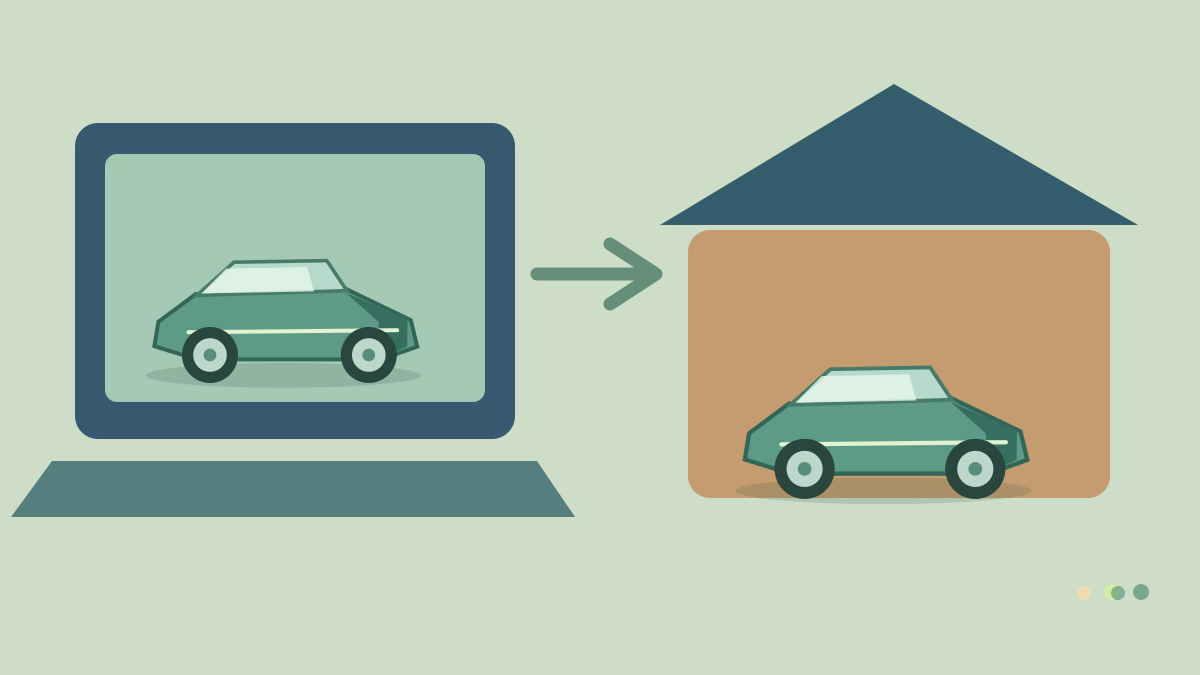
Compare remote car-buying services and local dealers by verified net proceeds, title handling and collection conditions.
The business model matters more than the label
An online car-buying service may arrange an in-person inspection or work through a participating dealer. A local dealership may provide an online estimate before an appraisal.
The labels therefore do not determine the actual transaction or prove which channel will pay more.
Identify the legal purchaser, how the car is assessed and whether the offer depends on buying another vehicle.
Verify the business independently and use its official contact route. A convincing brand name on a website or message is not enough to establish that you are communicating with that business.
Align the comparison
| Factor | Remote buying service | Local dealer |
|---|---|---|
| Appraisal | Questionnaire and verification process | Physical appraisal and any online inputs |
| Collection | Pickup or delivery conditions | Drop-off or agreed transport |
| Price | Final amount after adjustment and fees | Standalone purchase or trade-linked allowance |
| Loan handling | Confirm lender and title sequence | Confirm payoff agreement and completion |
| Timing | Offer expiry and collection window | Appraisal validity and appointment availability |
Use the same mileage, condition and included accessories when requesting quotes. KBB’s offer terms provide one example of a program with verification conditions; they do not describe every business.
Compare the money you retain
An illustrative $18,000 remote offer with $300 of collection charges produces $17,700 before any payoff. A $17,800 local offer without those charges would be $100 higher on those inputs.
The example is arithmetic, not a current fee or valuation claim.
Add other genuine differences rather than selecting a channel from its headline number.
For trade-linked offers, keep the replacement vehicle price and financing visible. A generous allowance is not necessarily a better deal if other parts of the purchase become more expensive.
Request an outright purchase figure where the dealer offers that option.
Before releasing the car, reconcile the final agreement, payment method and title process.
Verify a collection agent’s identity with the business.
Do not send money to an unfamiliar carrier because someone claims a payment has accidentally exceeded the price.
Retain the inspection findings, signed sale documents and pickup record.
Check how the offer becomes final
For an online offer, ask what happens after the first questionnaire: an inspector may confirm mileage, condition, keys, accessories and title status before the price becomes firm.
Get the written rule for adjustments and whether a missed collection window changes eligibility.
An estimate is not equivalent to confirmed proceeds.
For a local dealer, ask whether the written amount is a standalone purchase bid or a trade-in allowance conditional on acquiring another vehicle. A dealer might also use a remote appraisal service; the business model matters less than the actual obligation in the signed offer.
Compare time, cost and responsibility
A fast online appointment may still require paperwork, a lender payoff or proof of identity before collection. A dealer nearby may finalize a straightforward sale quickly, but can also require a second inspection or additional title documentation.
Ask each buyer how payment, lien release and possession are sequenced.
If you own the vehicle outright, confirm which signed title documents and identification the purchaser needs.
With an outstanding loan, obtain a valid payoff quote and ask who pays the lender, when the lien is released and when you receive any equity.
Do not sign a document stating a balance is settled until the written arrangement is clear.
An example: a remote buyer’s $19,100 estimate that may change after inspection is not directly comparable with a local dealer’s firm $18,900 offer valid for two days.
The more useful comparison is the written final amount after condition checks, transport charges and any trade-linked terms.
Choose based on the transaction you can complete
Someone who needs pickup for a non-running vehicle may value a service that explicitly accepts that condition. A driver replacing a vehicle on the same day may prefer a local dealership if its appraisal remains competitive after the replacement purchase price is separated.
Another seller may want to obtain bids from both channels and select whichever produces the best verified net result.
Before accepting, save the company’s actual name and official phone number, inspection record, proposed payment schedule, title or lien instructions and vehicle collection receipt.
Those records are more useful than an advertisement promising that the process is instant or completely effortless.
Does online always mean a faster sale?
Not necessarily. Verification, title problems, a lien or collection availability can affect timing. Ask for the process applicable to your car.
Is a local business automatically trustworthy?
No. Check identity, licensing where applicable and the written terms. Physical proximity may help communication, but it does not replace payment verification or accurate transfer records.