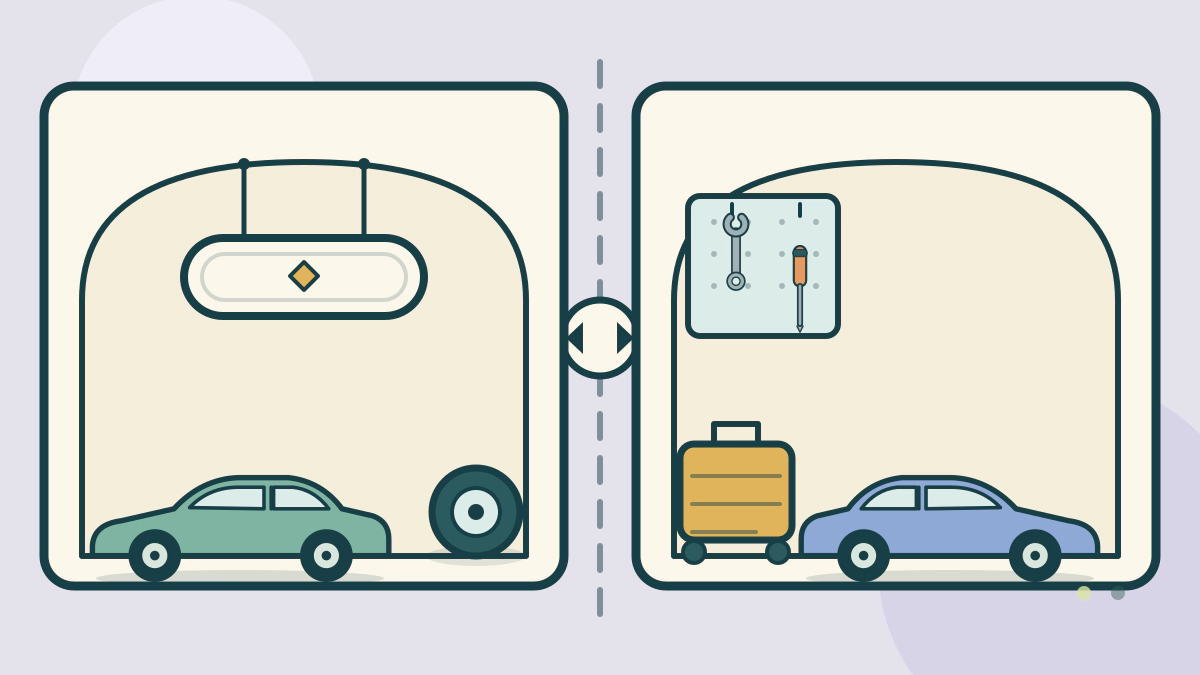
Compare dealership and independent shop technician jobs on BLS pay, flat-rate work, warranty and recall jobs, training access and who buys the tools.
Which setting pays more, a dealership or an independent shop?
A dealership pays more on average. BLS puts the median for technicians at new-car dealers at $59,920 a year, against $49,630 at independent mechanical and electrical repair shops. The median for the occupation as a whole was $50,620 in May 2025.
Those figures come from the BLS Occupational Outlook Handbook. They are industry medians, not starting salaries, and a busy independent can beat a slow dealer department.
This guide compares the two employers as workplaces. It does not pick one for you, because the answer depends on how you handle flat-rate pay, warranty rules and tool costs. The Automotive Careers and Education hub covers the wider set of roles.
The pay gap by employer, in one table
BLS reports 825,800 technician jobs in 2025 and gives median wages for the largest employer groups.
| Employer type | BLS median annual wage, May 2025 | Share of technician jobs | Work that dominates |
|---|---|---|---|
| Automobile dealers | $59,920 | 32% | Warranty, recall and customer-pay repairs for one brand family |
| Automotive mechanical and electrical repair and maintenance | $49,630 | 25% | Customer-pay repairs across many brands |
| Automotive parts, accessories and tire retailers | $45,700 | 6% | Tires, batteries and light maintenance |
| Other automotive repair and maintenance | $35,730 | 4% | Smaller and specialty operations |
Self-employed workers made up another 15% of the occupation.
Flat rate changes what a wage number means
BLS says some repair shops pay technicians hourly, while others pay “based on the amount of work completed”. The second model is usually called flat rate. Each job carries a set number of labor hours, and the technician is paid for those hours whether the job runs long or short.
Flat rate rewards speed and steady work. It also means a slow week, a comeback repair or a wrong part can cut your pay. Hourly pay is steadier but often limits upside.
Ask four questions at each interview. Is the plan hourly, flat rate, or salary plus bonus? Is any base guaranteed? How is diagnostic time paid? Who assigns the labor time? Get the answers in writing before you accept.
Warranty and recall work sits mostly at dealerships
Warranty work is the clearest structural difference. Honda’s warranty booklet says Honda will normally pay for warranty repairs only when an authorized Honda repair facility performs them. That creates a stream of manufacturer-paid jobs that independent shops do not see.
Recall work follows the same pattern. NHTSA says recall repairs are free to the owner at the manufacturer’s dealership. Recall work is handled at dealers, and an independent shop usually sees the vehicle only after the free remedy has been completed.
Manufacturer-paid work has a catch. The manufacturer sets the time it will pay. Honda’s booklet describes reimbursement “for Honda’s recommended time allowance” on covered emergency repairs. If the published time is tight, a flat-rate technician feels it in the paycheck.
Training access is not equal either
A dealer usually trains you on one brand, using that manufacturer’s courses and service information. BLS notes that some school programs are sponsored by manufacturers or dealers and focus on one type of vehicle, and that employers may pay for certifications.
An independent shop cannot send you to one brand’s school, because the next car may be a different make. You build breadth instead. BLS says certification can demonstrate competence and may bring higher pay. ASE offers entry-level tests plus separate certification series for automobile, collision, medium-heavy truck and manufacturer programs, as its test list shows.
Compare the training hours, who pays and whether the training happens on the clock. That matters more than a recruiting brochure.
Tool requirements differ more than new technicians expect
BLS draws the ownership line clearly. Jacks, hoists, pneumatic wrenches, lathes and computerized diagnostic tools “usually are owned by their employers”. Hand tools such as wrenches, pliers, sockets and ratchets are typically owned by the technician.
A dealer adds brand-specific special tools, and the shop keeps them. An independent shop may expect you to cover more of your own specialty equipment over time, because it cannot stock every brand’s kit.
The first-year hand-tool list looks similar in both settings. A school program such as Pine Technical and Community College asks students for 1/4, 3/8 and 1/2 inch drive socket sets, combination and flare-nut wrenches, pliers, hammers, a multimeter, safety glasses and a lockable box no longer than 42 inches.
Questions that separate a good job from a busy one
- What is the pay plan, and what is guaranteed in a slow week?
- How is diagnostic time paid, and who authorizes it?
- Does the shop pay for training, ASE tests and renewals?
- Is there a tool allowance or a special-tool budget?
- How are warranty and comeback jobs assigned?
- What weekly hours are expected, including Saturdays?
Ask technicians who are not managers how work is dispatched. For the customer side of the counter, see how to compare dealership quotes and what to ask a mechanic before approving repairs.
Frequently asked questions
Do dealership technicians really earn more?
On average, yes. BLS reports a $59,920 median at new-car dealers and $49,630 at independent mechanical and electrical repair shops for May 2025. Individual pay still depends on skill, certifications, location and the pay plan.
Is flat-rate pay bad for a new technician?
It can be. A new technician is still learning, so jobs take longer than the published time. Ask for a guaranteed base or a training period before moving to full flat rate.
Can an independent shop do warranty repairs?
Usually not at the manufacturer’s expense. Honda’s warranty booklet says warranty repairs normally must be done at an authorized Honda repair facility. An independent shop can still perform the same repair as customer-pay work.
Which setting gives better long-term training?
It depends on your goal. A dealer goes deep on one brand and its special tools. An independent shop exposes you to many makes and problems. ASE certification can support either path.